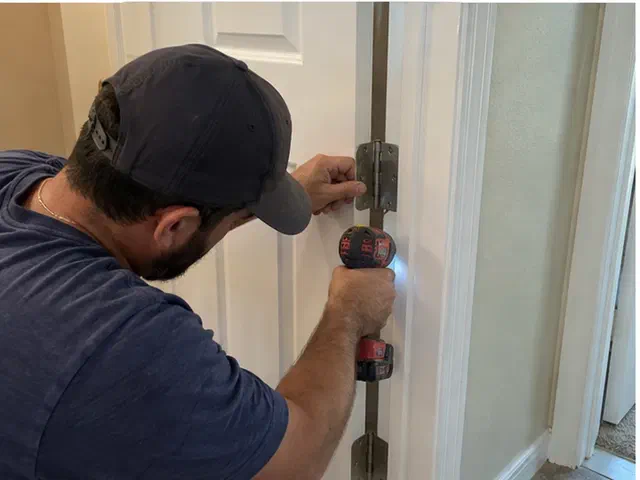
What the Work Involves
We check the hinge screws, frame, reveal around the slab, latch position, and floor clearance. Loose hinges get secured into solid framing. A shifted strike plate gets reset only after the door hangs correctly. For damaged casing or baseboard, we remove the failed section cleanly, fit the replacement, and prepare the joints for paint.
What You Get
- The cause checked before wood is removed
- Hardware adjusted with the door hanging square
- Trim cuts fitted and ready for finish
Signs You Need This
- The latch misses the strike plate
- A door rubs after humid weather
- Casing split around the lock
- Baseboard swelled after a small leak
- An exterior door shows daylight at the edge
Humidity and Swollen Doors
A wood door can swell during the wet season, but a door that suddenly drags can also have a loose top hinge or a frame that shifted. We look at the gap all the way around. A tight gap at one corner points to alignment; a tight edge from top to bottom points more toward swelling.
We correct hinges and the strike first. If the slab truly needs trimming, we take off only what it needs and seal the exposed edge so it does not soak up more moisture.
Exterior Door Water Damage
Soft jamb wood at the bottom usually means water has been getting past caulk, weatherstrip, or the threshold. Replacing trim without stopping that water buys a short repair. We open the damaged area enough to see what is sound and explain if the threshold or siding needs another trade.
Small jamb sections and casing can be repaired. A rotten frame that will not hold the hinges or lock safely is a replacement job.